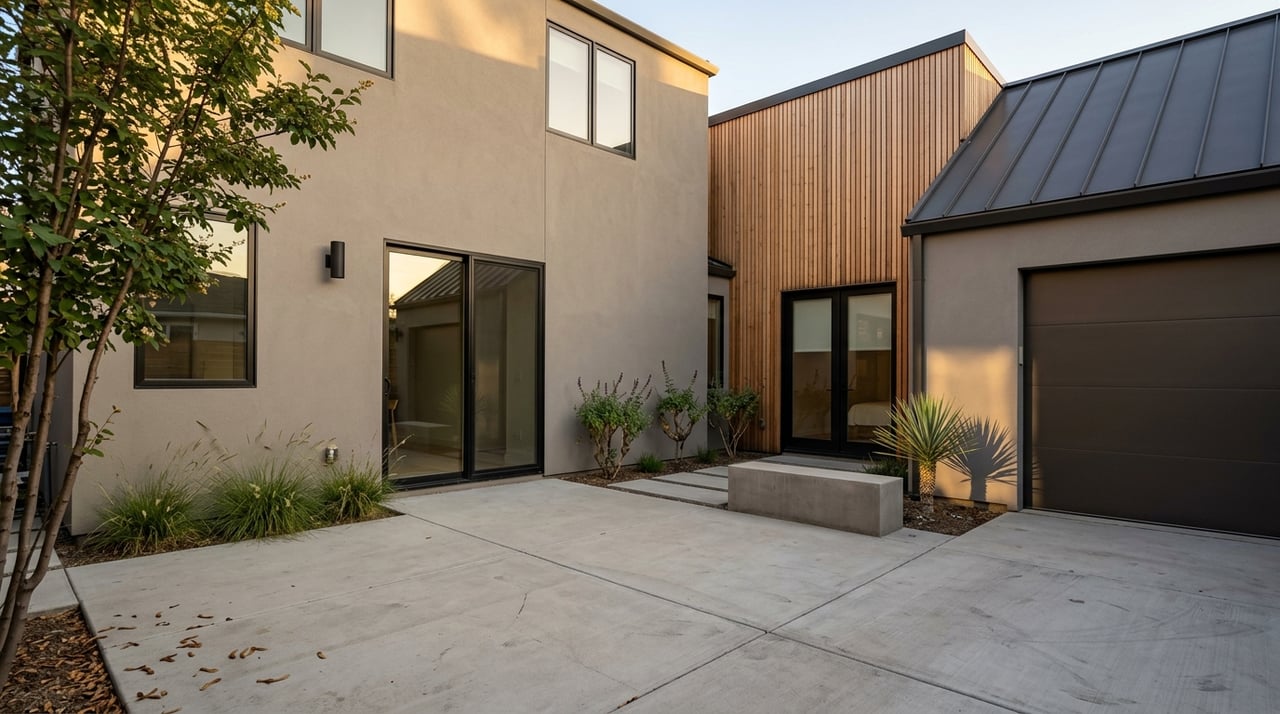
Trying to lower your housing cost in Denver while building long-term wealth? House hacking can be a practical path, but only if you understand how the strategy works in the real world. In Denver, that means looking closely at property type, financing, local ADU rules, rental licensing, and Colorado landlord obligations before you buy. If you want a clearer picture of what to expect, you’re in the right place. Let’s dive in.
What house hacking means in Denver
House hacking usually means you buy a home, live in part of it, and rent out the rest. In Denver, that often takes the form of a duplex, triplex, fourplex, or a single-family home with an accessory dwelling unit, also called an ADU.
That flexibility matters because Denver offers more than one way to make the numbers work. You might live in one unit of a small multifamily property and rent the other units, or you might buy a one-unit home with an existing ADU and use that extra space for rental income.
Small multifamily options to consider
For many buyers, a two- to four-unit property is the most direct house-hacking setup. FHA and Fannie Mae both allow owner-occupant financing for borrowers who live in one unit and rent the others, which can make this path more accessible than many people expect.
There are still important differences by property size. Under FHA guidance, a three- or four-unit property can include certain ADU combinations, while a one-unit property with an ADU still counts as a one-unit home.
Duplexes are often the simplest start
A duplex can be easier to understand from both a financing and management standpoint. You live on one side, rent the other, and keep your day-to-day landlord duties more manageable.
For buyers who want rental income without taking on too much complexity at once, that can be an appealing first step. It is often easier to picture vacancy, maintenance, and privacy tradeoffs in a duplex than in a larger building.
Triplexes and fourplexes can boost income
A triplex or fourplex may offer more income potential because you have more rentable units. That said, more units usually mean more moving parts, more tenant coordination, and more underwriting scrutiny.
HUD applies a self-sufficiency test to FHA purchases of three- and four-unit properties. In simple terms, the property’s net self-sufficiency rental income must be at least equal to the full monthly housing payment, including principal, interest, taxes, and insurance.
ADUs create another Denver house-hacking path
ADU-based house hacking is especially relevant in Denver. The city’s ADU materials say ADUs are allowed in residential and mixed-use zone districts that allow new single-unit dwellings, which opens the door for buyers looking at single-family properties with an income-producing component.
Denver’s urban pattern can help here too. The city notes that many neighborhoods have alley access, which can support detached backyard units in the right setup.
What Denver requires for ADUs
If you are considering an ADU strategy, details matter. Denver requires ADUs to be built by a licensed contractor, to have their own address, and to receive a certificate of occupancy before anyone can live in them.
Colorado law also requires local governments to allow an ADU on lots where single-unit detached homes are allowed by June 30, 2025. At the same time, state law limits owner-occupancy requirements, though Denver may still require you to show that you live on the parcel when applying to construct or convert an ADU in certain single-unit districts.
Existing ADU versus future ADU
There is a big difference between buying a home with a legal existing ADU and buying a property where you hope to add one later. An existing ADU may offer a more immediate income opportunity, while a future ADU plan adds permitting, construction, timeline, and budget risk.
That is where a practical property review matters. A buyer should look at zoning, site layout, access, contractor requirements, and occupancy approvals before assuming a backyard unit is feasible.
How lenders may count rental income
One of the biggest mistakes buyers make is assuming future rent will fully offset the mortgage. In practice, lenders usually use a more conservative approach.
For FHA, rental income from the additional units in an owner-occupied two- to four-unit property may be added to your gross income if it meets documentation rules. HUD also says lenders use the lesser of appraiser-estimated market rent or lease rent, and when rental history is limited, a 75 percent factor may apply.
Conventional rules for 2-4 units and ADUs
Fannie Mae also allows rental income from the subject property when you occupy one unit in a two- to four-unit principal residence. For one-unit homes with an existing ADU, Fannie Mae allows ADU rental income under specific conditions.
There is an important cap to know. For a one-unit principal residence with an ADU, qualifying rental income is limited to 30 percent of total qualifying income.
Rent analysis is part of the deal
Lenders do not just take your estimate of future rent. For conventional financing, Fannie Mae uses Form 1007 for one-unit properties and Form 1025 for two- to four-unit properties to support the rent analysis.
That means buyers should be careful about building a budget around optimistic rent projections. In a market where rents and vacancy have shifted, conservative assumptions can help you avoid a payment that feels too tight after closing.
Denver market conditions matter
House hacking is not just about the property. It is also about the market environment you are buying into.
DMAR reported that the broader Denver Metro market in 2025 looked more balanced than the pandemic years. Attached-home median sale prices fell 2.85 percent, buyers gained leverage, mortgage rates stayed in the six-to-seven percent range, and new inventory increased.
Why conservative rent assumptions matter now
Rental data points to a more measured outlook as well. The Apartment Association of Metro Denver reported average Metro Denver rents of $1,832 in July 2025, down 3.7 percent year over year, with vacancy at 6.4 percent and concessions averaging about 4.9 percent of gross rent.
That is apartment-market data, not a direct duplex or ADU comp set. Still, it is a useful reminder that buyers should underwrite cautiously rather than rely on peak-market rent assumptions.
Rental licensing in Denver is not optional
If you plan to rent part of your property in Denver for 30 days or more, you need to understand the city’s licensing rules. Denver requires a residential rental property license for anyone offering, providing, or operating a residential rental property in the city.
That requirement includes buildings, structures, and ADUs rented as a residence for 30 days or more. Short-term rentals are regulated separately, so a long-term house-hacking plan should start with the correct residential rental framework.
Colorado landlord rules to know before you buy
House hacking can look great on paper, but you are not just buying real estate. You are also stepping into landlord responsibilities.
Colorado now caps a residential security deposit at two months’ rent and caps a pet security deposit at $300. In most cases, the deposit must be returned within 30 days after the lease ends or the keys are surrendered, unless the lease allows up to 60 days.
Wear and tear and deposit handling
Colorado law says a landlord cannot withhold a deposit for normal wear and tear. If a deposit is withheld in bad faith, the penalties can include treble damages plus attorney fees and court costs.
That is one reason lease paperwork, move-in documentation, and property-condition records matter. Good systems help protect both you and your tenant.
Habitability and eviction process
Colorado landlord-tenant guidance also emphasizes habitability obligations. If a problem affects livability, it needs prompt and proper attention.
If a tenancy issue escalates, landlords must use the court process rather than self-help. Depending on the situation, the initial notice to cure or quit can range from 3 to 30 days, and some no-fault terminations require at least 90 days’ notice.
Roommates and occupancy rules changed in Colorado
For buyers considering a roommate-based setup, Colorado’s 2024 occupancy law is worth noting. Local governments can no longer limit the number of people living together in a dwelling based on familial relationship.
Health and safety standards can still apply, but family-status-based occupancy restrictions are no longer the framework. For some house hackers, that makes roommate arrangements more straightforward than they were before July 1, 2024.
A smart Denver house-hacking checklist
Before you make an offer, focus on the basics that drive both financing and long-term success:
- Confirm whether the property is a duplex, triplex, fourplex, or one-unit home with an ADU
- Verify whether any ADU is legal, addressed correctly, and has a certificate of occupancy
- Review Denver zoning and permit requirements if you plan to add or convert an ADU
- Ask your lender how rental income will be counted for that specific property type
- Use conservative rent assumptions instead of best-case numbers
- Budget for vacancy, repairs, and licensing costs
- Review Denver’s residential rental property license requirements for your intended use
- Understand Colorado rules for deposits, habitability, notices, and court-based eviction procedures
Why local guidance matters
In Denver, a good house-hacking opportunity is about more than headline cash flow. You need the property to fit your financing, the use to fit local rules, and the rental plan to fit your day-to-day comfort level.
That is where practical guidance can make a real difference. A broker with construction and property-management perspective can help you look past the listing photos and evaluate layout, permitting issues, rental potential, and risk before you commit.
If you are exploring duplexes, small multifamily, or ADU-friendly homes in Denver, the Matt Ladwig Team can help you evaluate options with a practical, numbers-driven approach.
FAQs
What does house hacking in Denver usually look like?
- House hacking in Denver usually means buying a property you live in and renting out the rest, most often through a duplex, triplex, fourplex, or a single-family home with an ADU.
Can you use FHA financing for a small multifamily property in Denver?
- Yes. FHA owner-occupant financing can work for two- to four-unit properties, but three- and four-unit purchases must meet HUD’s self-sufficiency test.
Can rental income from an ADU help you qualify for a Denver home loan?
- In some cases, yes. Fannie Mae allows rental income from an existing ADU on a one-unit principal residence under specific conditions, with qualifying ADU income limited to 30 percent of total qualifying income.
Do you need a rental license to house hack in Denver?
- Yes, if you are renting a residential property, unit, or ADU in Denver for 30 days or more, the city requires a residential rental property license.
Are ADUs allowed in Denver residential areas?
- Denver says ADUs are allowed in residential and mixed-use zone districts that allow new single-unit dwellings, but any ADU plan still needs to meet the city’s permitting and occupancy requirements.
What Colorado landlord rules matter for Denver house hackers?
- Key rules include limits on security deposits and pet deposits, deadlines for returning deposits, habitability obligations, and the requirement to use the court process rather than self-help for evictions.
Is Denver a good market for conservative house-hack underwriting?
- Current data suggests buyers should stay conservative. Denver Metro market conditions have become more balanced, and apartment-market data shows softer rents, higher vacancy, and concessions compared with prior peak periods.