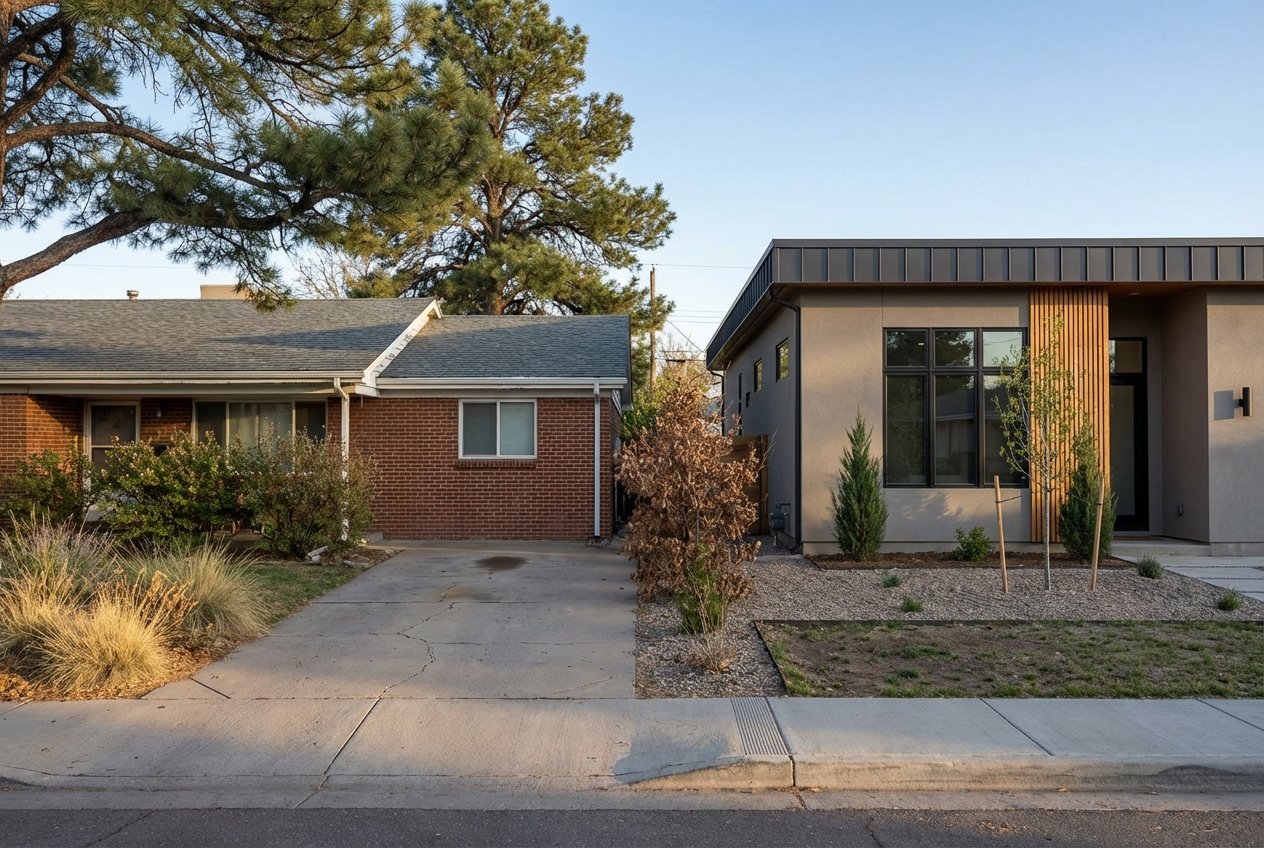
Thinking about buying in Erie and torn between a move-in ready resale and a shiny new build? You are not alone. Each path offers real benefits, and the right choice depends on your timeline, budget, and how much control you want over finishes and features. In this guide, you will learn how Erie’s market and neighborhoods shape your options, what to expect from timelines and warranties, and how to compare true costs with confidence. Let’s dive in.
Erie market snapshot at a glance
Erie is a fast-growing home-rule town that spans both Weld and Boulder counties. The Town of Erie reports a 2024 population of about 40,183 and a notably high median household income, which supports ongoing demand for master-planned communities and amenities. You should also know that taxes and permitting can differ by county, so it is smart to confirm which side of Erie a specific property sits in using the Town’s published resources. See the Town’s Community Profile for official context on jurisdiction and demographics. Town of Erie Community Profile
Recent data providers generally place Erie’s typical home values in the $700,000s, with small year-over-year changes in 2024–2025. Inventory and days on market have been more balanced than in the peak competitive years, which gives many buyers room to negotiate on resale or to consider a build timeline without rushing. The bottom line: Erie supports both paths right now, so your needs and timing should lead the choice.
Resale vs new construction: the short version
Both options can be smart in Erie. Start by lining up your nonnegotiables.
- Resale often fits if you want a faster move, established landscaping, and more room to negotiate on price or repairs.
- New construction often fits if you value a builder warranty, the ability to choose finishes and layouts, and access to new community amenities.
If you are still unsure, the sections below will help you compare step by step.
Timelines and move-in speed
Resale timelines
With an accepted offer, most resale closings in Erie take roughly 30 to 60 days, depending on financing, appraisal, title work, and any contingencies. Many buyers cluster in the 30 to 45 day window. If you need to sell another home first or you have complex lending, build in extra time. Rate locks and mover coordination will usually follow this same 30 to 60 day arc.
New construction timelines
New homes in Erie come in two buckets:
- Move-in ready or spec inventory: once construction is complete, you can typically close on a normal mortgage timeline similar to resale.
- Plan-to-build homes: production single-family homes in master-planned communities often take several months from permit to completion. Recent industry analysis shows national production tract homes commonly complete near the 7.6 to 9.1 month range, though local schedules vary by builder and phase. Get a written schedule with milestones at contract. NAHB construction timing overview
If you need to move quickly, resale or an existing spec home is usually the smoother path. If customization matters more than timing, a to-be-built plan can work well.
Warranties and post-sale protection
New home warranties
Most production builders enroll in an industry-standard structural warranty that commonly follows a 1-2-10 format: 1 year for workmanship and materials, 2 years for distribution systems, and 10 years for qualifying structural defects. Ask whether it is insurance-backed, how claims work, and whether it transfers to a future buyer. Learn more about common new-home warranty structures
Resale protections
Resale homes do not come with a builder warranty. Your protection comes from inspections, negotiation, and optional third-party home warranties you may purchase at or after closing. The upside is flexibility: you can request seller credits for repairs or price adjustments based on inspection findings. The trade-off is more variability in near-term maintenance and replacements.
Lot size, orientation, and privacy
Erie’s lot sizes vary widely by neighborhood and product type. Town-wide aggregator data shows a median single-family lot size near roughly 7,400 square feet, but newer master-planned sections often include smaller conventional lots and patio-home footprints. Public materials for neighborhoods like Westerly show many lots in the mid-5,000 square foot range for certain product lines, while other Erie subareas market larger or estate lots.
What matters most is the specific lot. Check the recorded plat for exact square footage, build-to lines, and easements. Also confirm future phases around your lot so you understand what will be built next door or behind you. If yard space or privacy is a top priority, zero in on corner parcels, cul-de-sacs, or blocks with fewer direct sightlines, then verify everything on the plat.
HOA, amenities, and maintenance scope
Many new Erie communities are master planned with pools, trails, parks, and clubhouses. HOA fees in these neighborhoods often land in the low-hundreds per month, though line items and assessments vary by sub-neighborhood. Some attached or patio products include limited exterior maintenance, while most single-family products cover common areas and amenities only.
For any property, request the HOA budget, covenants, and rules. Some master plans layer a sub-association on top of a master HOA, and rental policies or exterior guidelines can differ across sections. Read before you sign, especially if you plan to add solar, a shed, or short-term rent.
Customization, upgrades, and the true cost
New construction options and incentives
With a new build, you choose layouts and finishes during the design phase. The base price rarely reflects your final outlay once you add flooring, cabinets, counters, lighting, and potential structural options like a finished basement. Many builders also offer incentives such as rate buydowns, closing cost help, flex funds, or design-center credits. Ask for itemized upgrade pricing and a written allowance schedule. If you finance upgrades, confirm that completed comparables will support the final appraised value.
Resale personalization
A move-in ready resale can still benefit from targeted updates after closing. The advantage is control. You set the budget and the timeline, and you can often negotiate a credit for known repairs or dated finishes. If you love a specific block or lot, a smart renovation plan can deliver value without waiting through a build cycle.
Inspection, contingencies, and negotiation power
Resale contracts usually include full inspection rights, appraisal and loan contingencies, and leverage to request repairs or credits. In a balanced market, you can negotiate with confidence based on condition and comps.
Builder agreements often limit remedies and outline specific inspection windows, such as pre-drywall and a final walkthrough. Many buyers still hire independent inspectors for both milestones. Get the warranty details and the punch-list process in writing, and understand how delays or missed items are handled before you sign.
Appreciation and long-term outlook
In Erie, appreciation is driven more by micro-location, supply and demand, and broader metro trends than by whether a home is new or resale. Strong household incomes, proximity to Boulder and Denver, and steady population growth support long-term demand. Avoid blanket assumptions that new builds always appreciate faster. Instead, compare similar lots and nearby sales in the specific sub-neighborhood you are targeting. Use the Town’s official community profile to understand growth context and jurisdictional differences that may impact taxes and services. Town of Erie Community Profile
Where new construction is active in Erie
You will find a variety of new-home options across Erie’s master-planned areas:
- Westerly: a large community with multiple builders and staged move-ins across product types.
- Colliers Hill: an amenity-rich master plan with single-family offerings from well-known national builders and periodic incentive programs.
- Sunset Village and Flatiron-area communities: additional new-home pockets where national builders offer inventory and to-be-built opportunities.
Availability, incentives, and product lines change quickly, so get current releases, spec lists, and timelines directly from the on-site sales teams before you compare final numbers.
Quick decision guide for Erie buyers
Choose resale if you want:
- A faster 30 to 60 day close and the option to negotiate on price or repairs.
- Established landscaping and, often, larger or more varied lot choices.
- Flexibility to renovate on your timeline with your preferred contractors.
Choose new construction if you want:
- Builder-backed warranty coverage and a defined punch-list process.
- The ability to select layouts and finishes before you move in.
- Access to new amenities and a community that will fill in over time.
Erie homebuyer checklist
Use this list to keep your comparison apples to apples:
- Verify county and taxes: Erie spans Weld and Boulder counties. Confirm property taxes, school district boundaries, and permitting via the Town’s resources. Jurisdiction and tax context
- Timeline clarity: If building, request a written schedule from permit to completion with milestone dates and remedies for delays. Review typical build durations to set expectations. Construction timing reference
- Warranty scope: Ask for the full warranty booklet. Is it insurance-backed and transferable, and what are the exclusions and claim steps? Common 1-2-10 warranty overview
- Lot due diligence: Pull the recorded plat, confirm exact lot size, setbacks, easements, and planned phases next door or behind the lot.
- HOA and CCRs: Review budgets, reserves, rules, and any special assessments. Note any rental caps or exterior modification guidelines.
- Appraisal and upgrades: For new builds, get itemized upgrade pricing and confirm whether financed options will appraise. For resale, price out your top post-close projects.
- Inspection strategy: Schedule independent inspections for resale and, for new builds, consider pre-drywall and final inspections.
- Financing plan: Align rate locks with a 30 to 60 day resale close, or discuss construction-to-perm or extended rate options if you are building.
Ready to compare your options?
Whether you are leaning toward a character-filled resale or a new build with a clean warranty runway, you deserve clear numbers and a calm process. Our team pairs local market insight with construction know-how, so you can evaluate lots, timelines, warranties, and true total cost with confidence. When you are ready, the Matt Ladwig Team can help you see the full picture and move forward on your best-fit home in Erie.
FAQs
What is the typical timeline to close on a resale home in Erie?
- Most resale transactions close in roughly 30 to 60 days, depending on financing, appraisal, title work, and contingencies.
How long does a new construction home take to build in Erie?
- Production single-family timelines often fall near 7.6 to 9.1 months from permit to completion, with local variation by builder and phase. Timing overview
Do new construction homes in Erie usually have HOAs?
- Many master-planned communities include HOAs that manage common areas and amenities, with monthly fees often in the low-hundreds; confirm exact costs, rules, and any layered associations.
Are lots in new subdivisions smaller than in older Erie neighborhoods?
- Often yes for typical production sections, where mid-5,000 square foot lots are common, while town-wide medians hover around roughly 7,400 square feet; always verify on the recorded plat.
Does Erie fall in Weld or Boulder County, and why does that matter?
- Erie spans both counties, which can affect your property taxes, school district, and permitting; verify a property’s jurisdiction using the Town’s official resources. Town of Erie Community Profile